Home · History
Where cribbage came from
The short version you will hear in a pub is that Sir John Suckling invented the game in the seventeenth century. A longer, more careful version keeps that credit as a later tradition and points to an older game with a scoring board of its own.
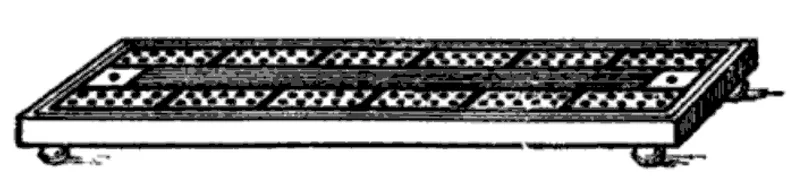
The game is commonly credited to the 17th-century English poet Sir John Suckling, but it clearly developed from an earlier game called noddy, which also used a special scoring board.1 The 1911 Encyclopædia Britannica, following John Aubrey’s Brief Lives, says cribbage was invented by Sir John Suckling (1609–1642), and that the game seems to be an improved form of noddy.2
A related but more complicated game, costly colours, is described by Charles Cotton in The Compleat Gamester (1674).1
Almost the only big change from the original rules is that, in the United States and in the British two-player domestic game, each player is dealt six cards instead of the original five.1 Five-card cribbage remains popular in British club and tournament play, commonly as a four-hand partnership game, where five cards is the norm.1 The 1911 Britannica records that two-handed five-card cribbage was formerly considered the more scientific game, but that this verdict had by then been reversed in favour of the six-card game, in which both hands and the crib contain four cards and 121 holes are scored. In the two-handed five-card game, the non-dealer scores three holes, called “three for last,” which is not part of the six-card game.2
The jack of the starter’s suit — formerly called “knave noddy,” a link with the earlier game — is worth one point to the holder for “his nob,” and is not scored until the showing.1